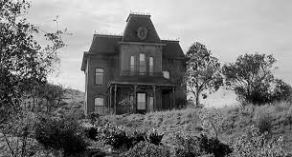
You’ll hopefully notice the patterns. We’re on our third Hitchcock-Coppola-Silent Film cycle. We also just did a ten-thousand word analysis (complete with pictures) on montage theory. Now, we will do a review on the “mother” of all Hitchcock films, one that includes the “mother” of all film montages. Why is Psycho the “mother” of all Hitchcock films? For those who have seen the film, the use of that word as qualifier is perfect. This is most famous Hitchcock, containing some of the most iconic images and characters and featuring the most recognizable music. Is it the best? No. Vertigo is. But this film is certainly among his best. While most movie critics decry its popularity because, while it is definitely a five-star film, Hitchcock has other five-star films that deserve more credit—like Notorious, Rebecca, or Rear Window. However, I think it deserves its place. My mood often changes, and it is most appropriate to say these films are all tied for first; but if you made me pick, Psycho would have to follow Vertigo if only for its cultural clout and haunting storyline. It sticks with you, perhaps more than any other Hitchcock film (except Vertigo, but that holds far too many trump cards, and if I keep bringing it up, it will succeed in boxing out Psycho from its own review). The whole nature of the film is haphazard, like a good haunted house, full of eery sounds, precipitous pictures, and a whole bunch of mentally-troubled characters. Its very origin cries out its rawness. Continue reading →
 A Slice of Cake