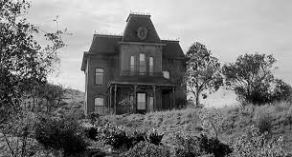
Psycho (1960)

images

You’ll hopefully notice the patterns.  We’re on our third Hitchcock-Coppola-Silent Film cycle.  We also just did a ten-thousand word analysis (complete with pictures) on montage theory.  Now, we will do a review on the “mother” of all Hitchcock films, one that includes the “mother” of all film montages.   Why is Psycho the “mother” of all Hitchcock films?  For those who have seen the film, the use of that word as qualifier is perfect.  This is most famous Hitchcock, containing some of the most iconic images and characters and featuring the most recognizable music.  Is it the best?  No.  Vertigo is.  But this film is certainly among his best.  While most movie critics decry its popularity because, while it is definitely a five-star film, Hitchcock has other five-star films that deserve more credit—like Notorious, Rebecca, or Rear Window.  However, I think it deserves its place.  My mood often changes, and it is most appropriate to say these films are all tied for first; but if you made me pick, Psycho would have to follow Vertigo if only for its cultural clout and haunting storyline.  It sticks with you, perhaps more than any other Hitchcock film (except Vertigo, but that holds far too many trump cards, and if I keep bringing it up, it will succeed in boxing out Psycho from its own review).  The whole nature of the film is haphazard, like a good haunted house, full of eery sounds, precipitous pictures, and a whole bunch of mentally-troubled characters.  Its very origin cries out its rawness. Continue reading
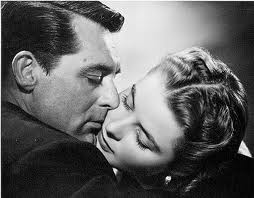
Notorious (1946)

index

In light of my most recent posts listing the best actors and acting performances in film, alongside a two-part page series on the analysis of acting, it is only timely to kill two birds with one stone.  Bird number one: write my next review–which is supposed to be on a Hitchcock film as the framework for my blog requires.  Bird number two: write a supplementary article on a superb acting performance within the context of a single film.  Stone number one and only: Notorious. Continue reading

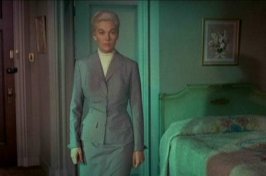
Vertigo (1958)

Vertigo+Kim+Novak

Alfred Hitchcock is considered by many voices in the industry to be the greatest director of all time.  It suffices to say that I agree with these voices.  For so many of us, Hitchcock represents the stunning collaborative effect of art, technique, and personality—a personality that was as complex as it was singularly driven; his self-awareness only heightening the depths to which he allowed himself to operate.  He has several stand-out films that define these many different facets of his personality.  Rear Window tackles the horrors of obsession and handicap.  Rebecca deals with the concept of haunting ghosts and tainted love.  Notorious challenges the cliches of a love affair and asks how far is one really willing to go to prove their devotion.  Psycho provides sheer terror and mental complexes, while Frenzy takes those to a new level before the backdrop of overt sexuality and social tension.  Dial “M” for Murder and Rope conquer the issues of a “perfect murder” and the moral relationship–and supposed ambiguity–of death and killing.  North by Northwest and The 39 Steps make evident to the greatest degree the patented Hitchcock-ian humor and wit. The Birds, like so many others, gives the viewer an iconic motif that will never be forgotten.  Sabotage and the Man Who Knew Too Much films deal with the horror of a murdered of endangered loved one.  Spellbound demonstrates the brilliance of artistic expression to terrify in its surrealist embrace of the subconscious.  Shadow of a Doubt and The Lady Vanishes permeate us with the actuality of what life is like when we are alone and are in very real danger–even when the threat is only perceived.  At the end of the day, watching a Hitchcock film is more an exploration of self than one would realize at first blush: he was as much an auteur as he was an exhibitionist, as much a psychoanalyst as he was a showman. Continue reading