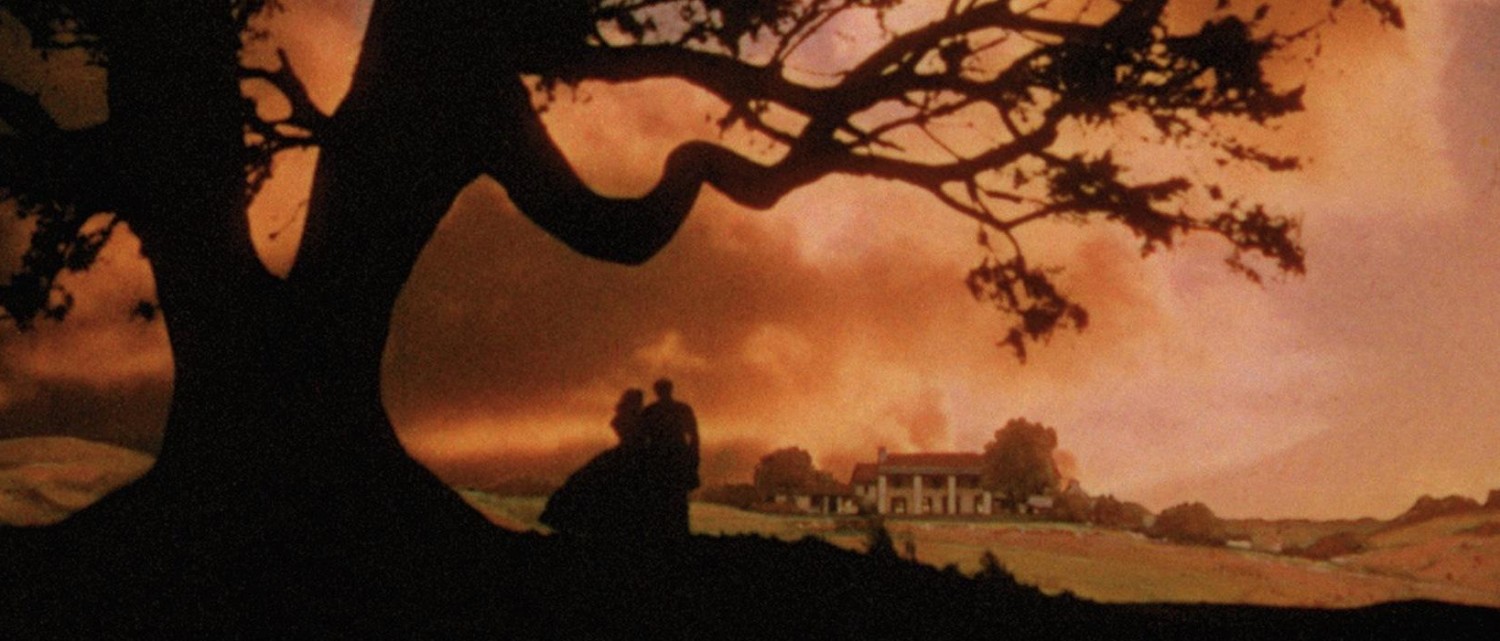
The holiday season doesn’t stop at Christmas. It continues on through New Year’s Day…at least in our neck of the woods. And, when it comes to New Year’s movies, there is none better than the great Frank Capra’s masterpiece, It’s a Wonderful Life. Continue reading
Monthly Archives: December 2014
Scrooge (1970)

One of my family’s most treasured Christmas traditions is to watch Ronald Neame’s unique musical interpretation of Charles Dickens’ A Christmas Carol, named after the story’s main character, Ebenezer Scrooge. Scrooge is, without question in my mind, the finest adaptation of this famous story ever committed to film. Some of the more faithful adaptations (like the one starring Patrick Stewart in 1999) reek of Hallmark made-for-TV movies. Others sacrifice the important emotion for the sake of Christmas commercialism, in what may be the most hypocritical move in the history of the industry. But Scrooge…Scrooge is the perfect adaptation, integrating enough of its own originality into the purity of Dicken’s novella. Continue reading
White Christmas (1954)

I just wrote a brief review of Holiday Inn, Mark Sandrich’s famous musical of 1942 starring Bing Crosby and Fred Astaire. Before you read this review, you have to read that review. This is because the substance of this review will be founded on important topics that I brought up in that one. The greatness of White Christmas lies not in the fact that it is a sweet or uplifting holiday classic. It is found, first and foremost, in an examination of its place in history and its position as a piece of cinema in juxtaposition with the films that preceded it. One of the great criticisms of White Christmas is that it is just “a pleasant little piece of fluff trying to capitalize on past accomplishments.” (So wrote Movie Metropolis’ John J. Puccio.) But, it is far less a consumerist attempt to spin-off of an older masterpiece than it is a completion of the tale left untold; it is, in essence, the post-war companion piece to its war-time counterpart. Continue reading
Holiday Inn (1942)
Fred Astaire and Ginger Rogers were in a lot of movies together, the best of which were Swing Time and Top Hat. It was on the set of Top Hat that Astaire first heard the melody that would become “White Christmas.” The tune was hummed to him by one of the great songwriting masters of the 1930s and 1940s, Irving Berlin, who was the chief songwriter for the film. Astaire was instantly smitten by the melody. The song, however, didn’t make the final cut for Top Hat. Continue reading
Miracle on 34th Street (1947)
So, it’s Christmastime. Considering the fact that I have hit my recent “Great American Screenplays” saga pretty hard over the last few months, I think it is plenty fair to take a break and indulge myself—and you—a little holiday liberality. Continue reading
Red River (1948)

Like I’ve already said, 1948 was an important year for the Western. This isn’t only because a lot of Westerns came out that year. It’s because, primarily, two Westerns came out that year. These two Westerns are The Treasure of the Sierra Madre and Red River. Together, they represent a bridge into a new era of this signature American genre: from the mythic hero-epics of the 1930s and 1940s to the character-focused mythic tragedies of the 1950s and 1960s. Continue reading
The Treasure of the Sierra Madre (1948)

1948 was an important year for the Western. Movies like 3 Godfathers and Fort Apache were contributing to the overwhelming continuation to the genre by the team of John Ford and John Wayne. Movies like Silver River with Erroll Flynn and Yellow Sky with Gregory Peck were headlining other great team-ups with superstar actors and directors (Raoul Walsh directed the former; William Wellman, the latter). The second World War was drifting into the past, but its ripples were still freshly informing the new artistic psyche, and these team-ups were beginning to integrate a far more human arrangement into the Western to supplant what was originally a mythological archetype. Method acting and human dilemma were rising to an important position in the way that Westerns were written. While these aforementioned films, and others, were making their dramatic (or, at times, comedic) impact on what was, before the war, a simple formula, two films really made waves in 1948. These two Westerns were The Treasure of the Sierra Madre and Red River. Continue reading
 A Slice of Cake