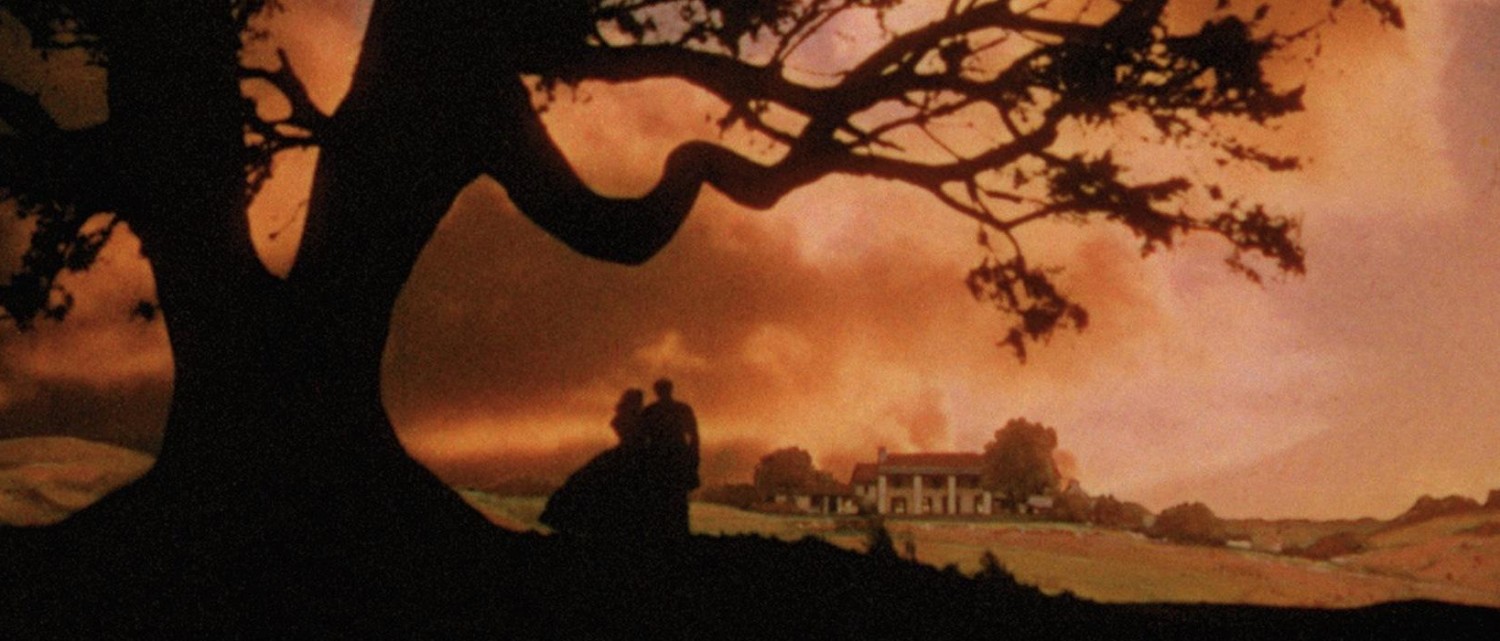
The General (1927)

sjff_01_img0193

I hope I timed this well.  I stated in my review of The Godfather that certain movies are better than others for the novice movie-watcher in order to springboard into the finer world of film.  I said that Hitchcock films, Coppola films, and silent films all fit that regulatory bill.  Other films are also fitting, but for consistency’s sake, and for structure’s sake, I stated those three categories.  I intend to keep to my aforementioned schedule so as to not confuse anyone, and also so I don’t have to backtrack and edit old comments due to my own lack of foresight.   We have a Hitchcock movie and a Coppola movie under our belt already.  Now, it’s time for a silent film. Continue reading

Roger Ebert (1942-2013)


Some people really changed my life when it came to movies.  I am forever indebted to my parents for helping me love and appreciate the occasional old-Hollywood film.  We watched Scrooge, How the Grinch Stole Christmas, and It’s a Wonderful Life every Christmas; there was always a John Wayne movie available to watch; and in my teenage years, my father made sure to help me understand how cool Cary Grant and Gary Cooper were.  But, for the most part, my development as a fan of film was based solely on my own research, my own experience and my own evolving opinion. Continue reading

The Godfather (1972)

The Godfather

There is a somewhat calculated way that I go about selecting which films I want to review first, and I do it in accordance with what my imaginary audience would deem most useful.  If my true goal is to highlight the progression from casual to competent–and I believe that I have made that expressly clear–it would not be wise of me to jump into a review of L’Avventura or The Discreet Charm of the Bourgeoisie. What I have found to be the best springboards for development as an active movie-watcher are any Hitchcock film, most Coppola films, and, surprisingly, silent movies.  I hope to use these three sub-groups in my preliminary reviews. Continue reading

The Greatest Directors of All Time

Please read this list in conjunction with my chapter on Auteur Theory.  The list attempts to reconcile a given director’s overall oeuvre, cinematic contributions (to theory and culture), and my personal taste.  In some cases, I considered popularity; there is something to say about a directors ability to garner an audience.  You will see that a good number of usual favorites do not make the cut in this list.  That is because a lot of these, unfortunately, don’t live up to my standard. Continue reading

Vertigo (1958)

Vertigo+Kim+Novak

Alfred Hitchcock is considered by many voices in the industry to be the greatest director of all time.  It suffices to say that I agree with these voices.  For so many of us, Hitchcock represents the stunning collaborative effect of art, technique, and personality—a personality that was as complex as it was singularly driven; his self-awareness only heightening the depths to which he allowed himself to operate.  He has several stand-out films that define these many different facets of his personality.  Rear Window tackles the horrors of obsession and handicap.  Rebecca deals with the concept of haunting ghosts and tainted love.  Notorious challenges the cliches of a love affair and asks how far is one really willing to go to prove their devotion.  Psycho provides sheer terror and mental complexes, while Frenzy takes those to a new level before the backdrop of overt sexuality and social tension.  Dial “M” for Murder and Rope conquer the issues of a “perfect murder” and the moral relationship–and supposed ambiguity–of death and killing.  North by Northwest and The 39 Steps make evident to the greatest degree the patented Hitchcock-ian humor and wit. The Birds, like so many others, gives the viewer an iconic motif that will never be forgotten.  Sabotage and the Man Who Knew Too Much films deal with the horror of a murdered of endangered loved one.  Spellbound demonstrates the brilliance of artistic expression to terrify in its surrealist embrace of the subconscious.  Shadow of a Doubt and The Lady Vanishes permeate us with the actuality of what life is like when we are alone and are in very real danger–even when the threat is only perceived.  At the end of the day, watching a Hitchcock film is more an exploration of self than one would realize at first blush: he was as much an auteur as he was an exhibitionist, as much a psychoanalyst as he was a showman. Continue reading