It Happened One Night (1934)

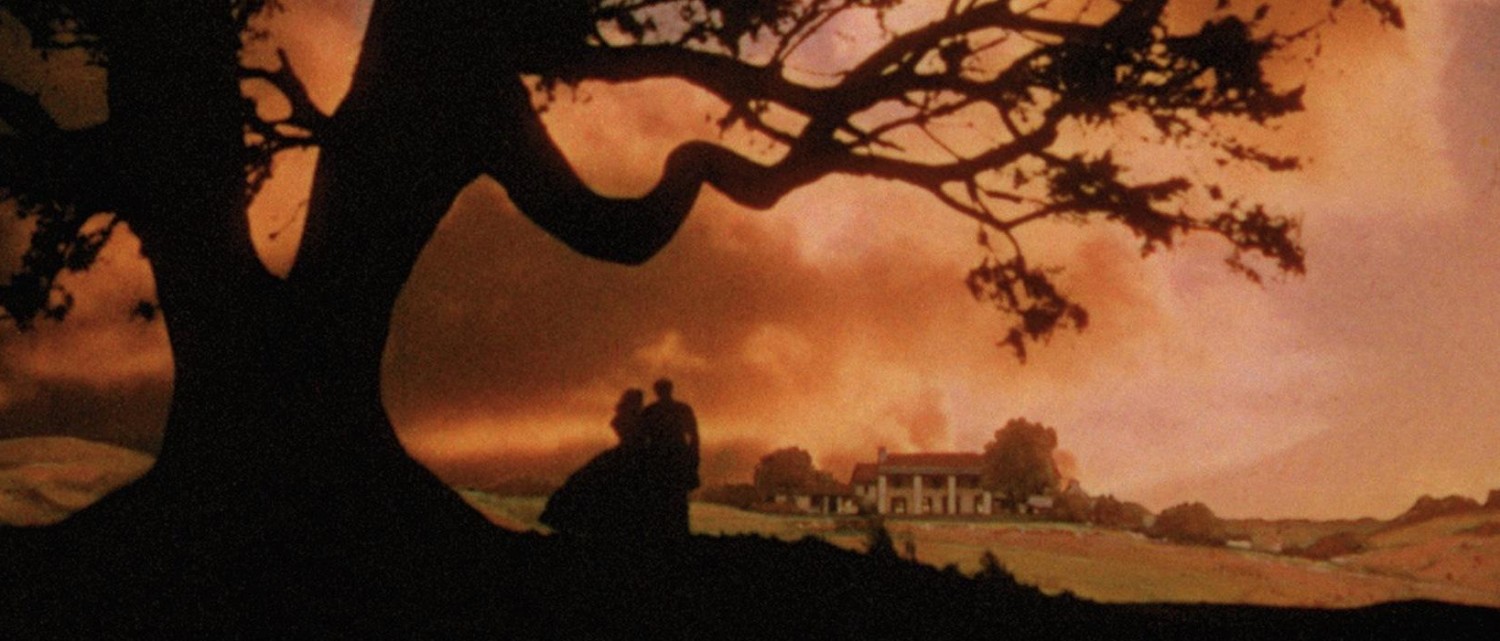
Of all the screwball/romantic comedies of the 1930s, few stand as tall as It Happened One Night.  When the movie was released to secondary movie houses in 1934 after mixed success with its initial release, it started a popular wave across the United States as people everywhere swarmed theaters to see Clark Gable—“The King of Hollywood”—and silent-film golden girl Claudette Colbert fall in love.  What at first appeared to be a flop turned out to be the biggest success in the history of Columbia Pictures up to that date. Continue reading

“Ignorance, Sheer Ignorance”: The Audacity and Innovation of the Citizen Kane Experiment

gregg and orson

Note: before reading this post, I want to make an apology.  This post is designed to prove the optic innovation and aesthetic quality of Citizen KaneTo help you—the reader—see first-hand some of the innovations at hand, I have included clips from the movie.  Unfortunately, these clips are hosted through YouTube and other online sources that are subject to the fickleness of Internet connections and the variance of upload quality.  Because of this, the complete visual experience of Citizen Kane is not available in these clips alone, because they may be more blurry or slow than they would be watching a well-restored Blu-Ray or DVD release. 

In my last post, I attempted to make one point quite clear: the greatness of Citizen Kane lies in its duality.  It is part-drama, part-comedy.  It is based on truth, but shrouded in lies.  It’s a mystery with no resolution.  It is light.  It is dark.  It is black.  It is white. Continue reading

Kane the Movie

download

This next post in my series of essays on Citizen Kane will focus not so much on the history of the film, nor will it view the film as an examination of its makers.  This will act as a true movie review, focusing on what makes the movie so great as a stand-alone viewing performance. Continue reading

Kane the Man

kane

Charles Foster Kane walks through the threshold of the room that was once occupied by his beautiful wife—a shrine to her celebrity, a celebrity that was as empty as it was critically panned—but now stands wrecked and uninhabited.  Through his own machinations, he had made that woman who she was; not only was her fame a product of his intrusion, but so, also, was her marriage to him.  For years they had sat on opposite sides of the vast hall, she with her jigsaw puzzles on the floor, he in his throne-like master chairs, looking at the gargantuan fireplace before him.  Were there ever two more isolated activities than those?  Now, that void had been finally realized, and she had left him—for once, a decision based on her own free will.  His behavior had brought about her departure, and he recognized his role in it.  But, he would not be undone.  He had built that shrine, he would tear it down.  And so he had.  And now, behind him, the bedroom lays a shambles: statues, trophies, linens and furniture broken, torn and scattered throughout the room. Continue reading

The Story of Citizen Kane: William Randolph Hearst and the Kane Controversy

170px-William_Randolph_Hearst_cph_3a49373

The story of Citizen Kane as already written in this blog—the story of Orson Welles, the Mercury Theatre, Gregg Toland, RKO Pictures, and Herman Mankiewicz—is all well and good; but the story has far more significance when examined from a different perspective.  Imagine, for a moment, that all those players about whom I wrote in my previous post—Orson Welles, the Mercury Theatre, Gregg Toland, RKO Pictures, and Herman Mankiewicz—are the “good guys”, the protagonists, in this story about the movie’s production.  Well, a good story always has a bad guy. Continue reading

The Story of Citizen Kane: The Mercury Theatre and Other Players

mercury cbs

I hope that in reading the introduction to this series of essays on Citizen Kane, you—the reader—went and rented the movie and watched it, or at least wanted to.  I want to write so much about the movie; but to not watch the movie until I am done writing would, I think, be detrimental.  Part of that is because the movie is known for its important ending, which I would hate to spoil.  However, to not write about the ending would be to not write about the whole movie.  It puts me in an awkward situation.  So, go watch the movie.  Then, I won’t feel bad in throwing around some spoilers. Continue reading

My Introduction to a Series of Essays on Citizen Kane

kane

The most intimidating part of this blog is now upon me.  Part of me has wanted to do this for a long time.  Another part has been apprehensive. Continue reading

The Great Dictator (1940)

charlie-chaplin-in-the-great-dictator

Charlie Chaplin is so much fun to watch that he’s actually fun to write about.  I recently had a social networking request to hear a review of The Great Dictator, and since I have enjoyed writing the last three film reviews so much (all three about Chaplin movies) I must readily accept this request.  The decision is not made lightly.  After all, this movie is by far his most controversial, not just in regards to his content but also in regards to the large spectrum of approval that this movie has been subject to over the years. Continue reading

City Lights (1931)

citylights

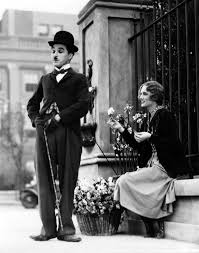
In my review of Modern Times, I said that it was part of Charlie Chaplin’s “Big 3” along with The Gold Rush and City Lights.  Since I have already reviewed The Gold Rush as well—and, in that review, admitted that I had great desire to tarry in Chaplin’s world for a little while—I would like to now provide a review of Chaplin’s best picture, City Lights. Continue reading

The Gold Rush (1927)

gold rush

I have decided that as long as I am here, I will stay here and enjoy it.

For me, after all, Charlie Chaplin is like Paris.  He’s that thing you’ve always heard of and can recognize in a heartbeat even if you’ve never really seen it for yourself.  He’s the one who’s always been there; not a single person alive today knows of a time when he wasn’t.  He’s the icon that transcends just one country; he belongs a little bit to everyone.  Amid a Hollywood full of Chicagos and Houstons, Chaplin is the La Ville-Lumière, the City of Love and Lights.  It is only fitting, therefore, that he made such urban films.  With that being said, his personal favorite film, and the one which is most universally praised, is The Gold Rush: his most rural. Continue reading