
The most intimidating part of this blog is now upon me. Part of me has wanted to do this for a long time. Another part has been apprehensive. Continue reading
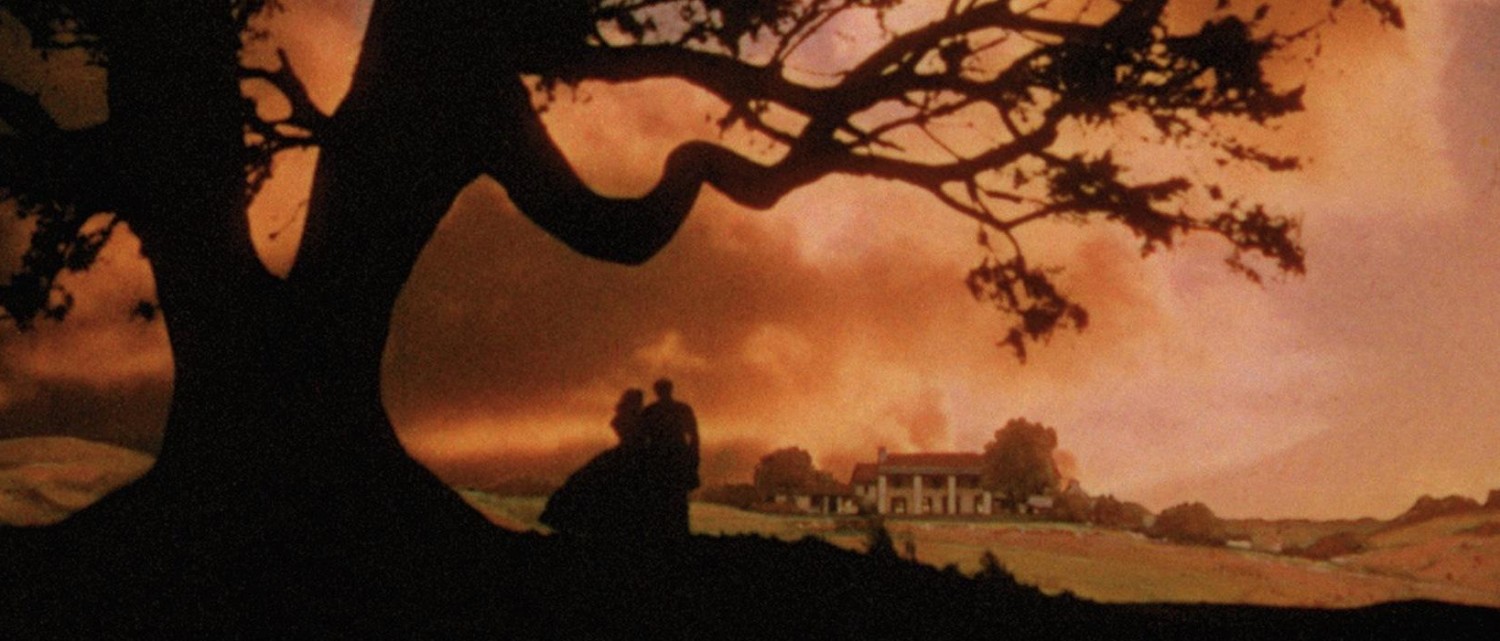
The most intimidating part of this blog is now upon me. Part of me has wanted to do this for a long time. Another part has been apprehensive. Continue reading

Okay, so this is a little indulgent. But I can’t help but think that all this Academy Award talk in which I have been engaging can be diverting in this quest from casual movie watching to competency in film. What I would like to do is bring back the discussion from contemporary films and set our sights backwards again, towards the vast world of cinema that encompasses over a hundred years of art and culture. So, I’ve decided to go back and set up my own hypothetical awards ceremony, complete with honorary awards and imaginary glamor. Imagine a red carpet with Miley Cyrus in her fishnet leggings and Audrey Hepburn in her black Givenchy dress; Jared Leto’s long hair followed by Humphrey Bogart in unbelted wool jackets. The notion is enchanting, sure. Those basketball or football video games that I like to play often have a “fantasy draft” setting or a pick-up game kind of setting were you can do the most absurd things: you can have LeBron James play against Oscar Robertson, or have the Detroit duo of Isaiah Thomas and Bill Laimbeer take on Michael Jordan and Dennis Rodman. Why not do something like that for movies? I consider this “fantasy academy” a well-earned journey into the indulgent imagination of my own self. It is time to let all those worlds, the world of John Huston, the world of Federico Fellini, the world of Robert Bresson, the world of Martin Scorsese, and the world of Christopher Nolan, all come together in the ultimate exposition of glamor, art, competition, and class. And considering the fact that my lists of the greatest directors and movies and acting performances are buried so deep in this blog, I feel like a resurrection of these lists in some new form is not an altogether bad idea, especially considering the fact that I just posted a page which, in essence, restated all the principles and theories that this blog has laid out thus far. As long as I’m in the “reviewing” mode, I might as well review those earlier lists by having a little fun; having my own awards ceremony in my head.
The nominees are listed in alphabetical order. There are 10 nominees for each category. The winners are in bold. I have hyperlinked all but one of the nominees to clips online (most of which can be found on YouTube) for your viewing pleasure. Continue reading

I have decided that as long as I am here, I will stay here and enjoy it.
For me, after all, Charlie Chaplin is like Paris. He’s that thing you’ve always heard of and can recognize in a heartbeat even if you’ve never really seen it for yourself. He’s the one who’s always been there; not a single person alive today knows of a time when he wasn’t. He’s the icon that transcends just one country; he belongs a little bit to everyone. Amid a Hollywood full of Chicagos and Houstons, Chaplin is the La Ville-Lumière, the City of Love and Lights. It is only fitting, therefore, that he made such urban films. With that being said, his personal favorite film, and the one which is most universally praised, is The Gold Rush: his most rural. Continue reading

My blog, at least on the surface, is directed by reason and ruled by rationale. While I sometimes stray from the formula (see my occasional dabblings in annual Academy Awards season, etc.), I attempt to methodically determine what is the next best thing to post in conjunction with what has already been posted and what I would like to post in the near- and distant-future. In this regard, the option for my next film review is obvious: I’ve done three Hitchcock films and three Coppola films (Vertigo, Notorious, Psycho, The Godfather, Apocalypse Now, and The Conversation) and only two silent films (The General and Battleship Potemkin). It is time, therefore, for a silent film. Continue reading

The “last of the hard-drinking hellraisers” is dead, as was written December 14 by The Telegraph writer Robbie Collin. Richard Burton, Richard Harris, Oliver Reed and others defined a generation of British actors hailing from Wales, Ireland, Scotland and England with their mix of imposing acting dexterity and their hell-raising personal lives. Besides Richard Harris—perhaps—the most significant of these British hell-raisers was Peter O’Toole. His significance was not born merely of his controversial life off the stage and away from the screen, but because he, above all others, was the greatest on that stage, and on that screen. No actor in history has matched his volatility as a character actor, nor have they ever been able to meet him in his potent monologues. There was something about his diction, a perfect blend of Irishman and Shakespearean reciter, that complimented his intensity of gaze, his angular expressions, and his physical simplicity. His roles were a true masks of self, yet, somehow, reflections of that bombastic and flamboyant personality were found in each one of those roles. For O’Toole, his own self was an integral part of every character he portrayed. Perhaps this is best shown in own appraisal of his performance in Lord Jim—a role many considered a failure: “I was so wrong for the picture,” he said. “When I play reflective types, I tend to reflect myself right off the screen.” Continue reading
(This list, like all lists in this blog is regularly updated when I feel it is necessary).
I like to release a fun little list in conjunction with my new posts and pages. I think it’s time I put up a new one, especially considering the fact that I didn’t have such a list for that mammoth publication on montage theory I did. Now, considering the emphasis I placed on wit and dialogue in my “My Take On…Comedy” page, I felt it would be appropriate to list the greatest movie quotes of all time. Most of these are comedic in that they are funny, satirical, witty, or sarcastic—as a matter of fact, they’re all at least witty (though some are far from funny). That is good enough reason to publish this list in conjunction with an analysis on comedy. Continue reading
*And supplementary lecture on the nature of silent film.

This blog is due for another silent film, and the one that I have selected is Battleship Potemkin (or, in Russian, Bronenosyets Potyomkin). As was recently posted, Potemkin stands at number 2 on my list of the “Most Important Films of All Time.” These are films selected strictly for aesthetic and technical innovation, with the qualification that said innovation produced radical change in the popular movie landscape, and not due to story or tertiary film elements along the lines of score, acting, or literary devices—save for those situations when one of those tertiary elements brought forth radical change (Wizard of Oz, for example). These were, quite simply, decided upon the film itself. Not the film as in “the movie,” but film as in the film, the literal celluloid collection. Embracing film as a singular art medium is a necessary facet to understanding silent films, and is unfortunately lost in much of what we consider quality film criticism today. Continue reading
I had some time; I made this video. These are 100 films (mostly American) that I think everyone needs to see on their journey towards film competency. THIS IS NOT A LIST OF THE GREATEST FILMS EVER. It is a list of some of the greatest films ever, films that I think everyone should see before they start making claims that they are true movie-buffs. It is set to the sublime score of John Williams’ Schindler’s List. Please excuse two typos in the titles of the film. Continue reading

Some people really changed my life when it came to movies. I am forever indebted to my parents for helping me love and appreciate the occasional old-Hollywood film. We watched Scrooge, How the Grinch Stole Christmas, and It’s a Wonderful Life every Christmas; there was always a John Wayne movie available to watch; and in my teenage years, my father made sure to help me understand how cool Cary Grant and Gary Cooper were. But, for the most part, my development as a fan of film was based solely on my own research, my own experience and my own evolving opinion. Continue reading
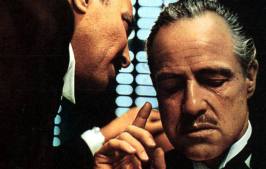
There is a somewhat calculated way that I go about selecting which films I want to review first, and I do it in accordance with what my imaginary audience would deem most useful. If my true goal is to highlight the progression from casual to competent–and I believe that I have made that expressly clear–it would not be wise of me to jump into a review of L’Avventura or The Discreet Charm of the Bourgeoisie. What I have found to be the best springboards for development as an active movie-watcher are any Hitchcock film, most Coppola films, and, surprisingly, silent movies. I hope to use these three sub-groups in my preliminary reviews. Continue reading
 A Slice of Cake