Peter O’Toole (1932-2013)

images

The “last of the hard-drinking hellraisers” is dead, as was written December 14 by The Telegraph writer Robbie Collin.  Richard Burton, Richard Harris, Oliver Reed and others defined a generation of British actors hailing from Wales, Ireland, Scotland and England with their mix of imposing acting dexterity and their hell-raising personal lives.  Besides Richard Harris—perhaps—the most significant of these British hell-raisers was Peter O’Toole.  His significance was not born merely of his controversial life off the stage and away from the screen, but because he, above all others, was the greatest on that stage, and on that screen.  No actor in history has matched his volatility as a character actor, nor have they ever been able to meet him in his potent monologues.  There was something about his diction, a perfect blend of Irishman and Shakespearean reciter, that complimented his intensity of gaze, his angular expressions, and his physical simplicity.  His roles were a true masks of self, yet, somehow, reflections of that bombastic and flamboyant personality were found in each one of those roles.  For O’Toole, his own self was an integral part of every character he portrayed.  Perhaps this is best shown in own appraisal of his performance in Lord Jim—a role many considered a failure: “I was so wrong for the picture,” he said. “When I play reflective types, I tend to reflect myself right off the screen.” Continue reading
350 Greatest Movie Quotes

(This list, like all lists in this blog is regularly updated when I feel it is necessary).

I like to release a fun little list in conjunction with my new posts and pages.  I think it’s time I put up a new one, especially considering the fact that I didn’t have such a list for that mammoth publication on montage theory I did.  Now, considering the emphasis I placed on wit and dialogue in my “My Take On…Comedy” page, I felt it would be appropriate to list the greatest movie quotes of all time.  Most of these are comedic in that they are funny, satirical, witty, or sarcastic—as a matter of fact, they’re all at least witty (though some are far from funny).  That is good enough reason to publish this list in conjunction with an analysis on comedy. Continue reading

The Conversation (1974)

index

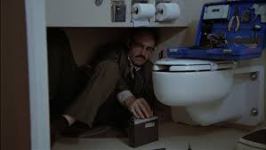
Coppola’s most celebrated films are the first two Godfather movies.  The first came out in 1972, and the second came out at the end of 1974.  In between them, there was The Conversation.  The Conversation has lost much of his reputation and prestige over the last two generations or so, and that is a great misfortune for such a quality film, which played quality role in Coppola’s complete compendium.  The reason for this importance is simple: it is Coppola’s most personal, introverted film, in other words, it his most revealing auteur picture.  Understanding the context of auteurism improves the overall viewing experience of The Conversation. Continue reading

Psycho (1960)

images

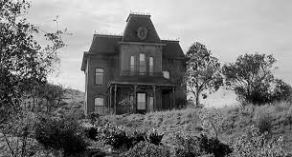
You’ll hopefully notice the patterns.  We’re on our third Hitchcock-Coppola-Silent Film cycle.  We also just did a ten-thousand word analysis (complete with pictures) on montage theory.  Now, we will do a review on the “mother” of all Hitchcock films, one that includes the “mother” of all film montages.   Why is Psycho the “mother” of all Hitchcock films?  For those who have seen the film, the use of that word as qualifier is perfect.  This is most famous Hitchcock, containing some of the most iconic images and characters and featuring the most recognizable music.  Is it the best?  No.  Vertigo is.  But this film is certainly among his best.  While most movie critics decry its popularity because, while it is definitely a five-star film, Hitchcock has other five-star films that deserve more credit—like Notorious, Rebecca, or Rear Window.  However, I think it deserves its place.  My mood often changes, and it is most appropriate to say these films are all tied for first; but if you made me pick, Psycho would have to follow Vertigo if only for its cultural clout and haunting storyline.  It sticks with you, perhaps more than any other Hitchcock film (except Vertigo, but that holds far too many trump cards, and if I keep bringing it up, it will succeed in boxing out Psycho from its own review).  The whole nature of the film is haphazard, like a good haunted house, full of eery sounds, precipitous pictures, and a whole bunch of mentally-troubled characters.  Its very origin cries out its rawness. Continue reading

The 22 Most Important Films of All Time

While historical significance certainly plays its role in helping me determine my favorite films (see my “Greatest Films of All Time” list), other factors played equally poignant parts: my own personal bias, the impact of the film upon viewers, film quality and popularity, to name a few.  But, insofar as this blog is designed to help the casual movie-goer become a competent one, I must help by making more specialized lists.  This particular list looks at historical and cinematographic significance as a complex dual-characteristic: namely, “importance.”  Often, lists of this type go by the name of “influential.”  But “influential” means important only in the context of history and fad.  “Important,” on the other hand, involves the goal of this blog.  These films are “important” in that they help create a backdrop wherein one can contextually understand the development of film and the proper languages of film—as André Bazin would put it—which open your eyes to the world of cinema.  I wish I had paid better attention to lists like this one in my early days of movie-going.  I believe that it would have helped a lot.

The following movies were “influential” to other movies that followed.  They are “important” to you and to me, the viewers, in our attempt to become more competent movie-watchers. Continue reading

Apocalypse Now (1979)

images

My structure remains.  Hitchcock, Coppola, silent film.  Hitchcock, Coppola, silent film.  Hitchcock, Coppola, silent film.  Perhaps after that, I’ll move on to other things.  As for Coppola, The Godfather movies provide only so much potency.  What The Godfather enjoyed, perhaps to a greater degree than any other movie was that it was a story so stunning–and so driven by motif and character–that it probably could have made itself.  Put a director with Francis Ford Coppola’s touch behind the camera and the movie no longer makes itself, but instead becomes the most precious clay a sculptor could ever want: a clay that becomes a masterpiece by mixing the perfection of the plot with the tenacious and dexterous master’s touch.  With that being said, there is perhaps no Coppola film that better exhibits the directorial skill of its creator than 1979’s Apocalypse Now. Continue reading

Notorious (1946)

index

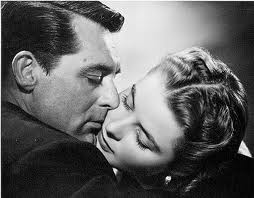
In light of my most recent posts listing the best actors and acting performances in film, alongside a two-part page series on the analysis of acting, it is only timely to kill two birds with one stone.  Bird number one: write my next review–which is supposed to be on a Hitchcock film as the framework for my blog requires.  Bird number two: write a supplementary article on a superb acting performance within the context of a single film.  Stone number one and only: Notorious. Continue reading

My Countdown Video

I had some time; I made this video.  These are 100 films (mostly American) that I think everyone needs to see on their journey towards film competency.  THIS IS NOT A LIST OF THE GREATEST FILMS EVER.  It is a list of some of the greatest films ever, films that I think everyone should see before they start making claims that they are true movie-buffs.  It is set to the sublime score of John Williams’ Schindler’s List.  Please excuse two typos in the titles of the film. Continue reading

Greatest Acting Performances (Male and Female)

I have been on an acting binge lately and have determined to publicize a list of the greatest acting performances of all time; this is conjunction with my current two-part series on acting that can be found in my pages, as well as my earlier list of my favorite actors.  I’m sure a list of my favorite actresses will come next.  With this list, I see little to no necessity to divide based on gender or—worse yet—to divide into four, first by gender then again by the ever-present lead-role/supporting-role dynamic.  So, I have made a list wherein all acting performances that I personally have witnessed (irregardless of gender or prevalence in the film) are given equal footing and wherein only the best are counted.  The selection of number one, I know, is bold.  But I dare anyone to see this person in this movie and tell me that I’m wrong.  Of course, I think I’m right.  It’s my opinion. Continue reading

The Best Actors

All movie-goers (casual and competent) have “guilty pleasures.”  For me, the occasional action film or comedy can fulfill a part of me that no Antonioni drama ever could.   That being said, there is a mortal aspect to said pleasures: they are rooted either in nostalgia or in the heat of a single moment that soon dies off.  Because of that, you will notice the allowance of indulge into my list-making.  I think that of all my lists, my lists on actors will be the most indulgent.  But, don’t be made to think that these don’t have clout.  Consider them overrated.  Better yet, consider them necessary indulgences for the evolution from casual to competent. Continue reading