
When it comes to Westerns, there is one ultimate King. It is not John Wayne (he’s only a Duke). It is not Clint Eastwood or Sergio Leone. It’s not Roy Rogers or his trusted Trigger. When it comes to Westerns, the King is John Ford. Continue reading
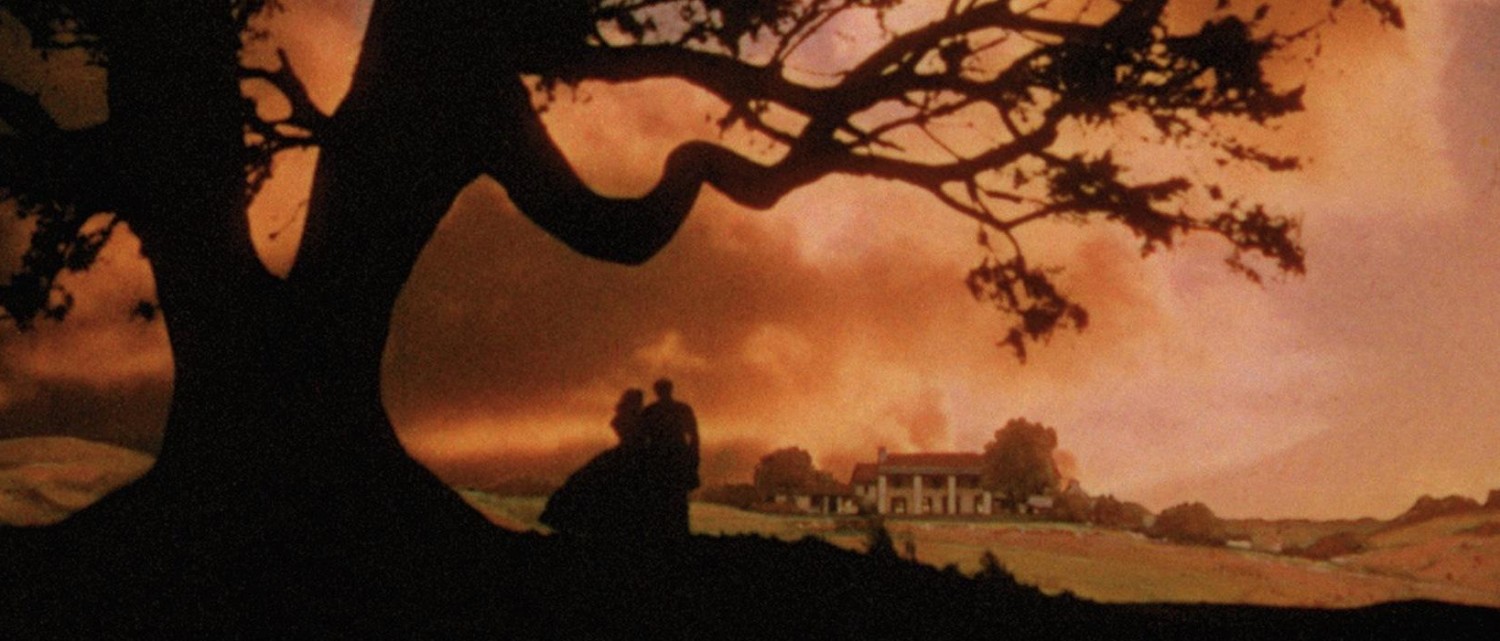
When it comes to Westerns, there is one ultimate King. It is not John Wayne (he’s only a Duke). It is not Clint Eastwood or Sergio Leone. It’s not Roy Rogers or his trusted Trigger. When it comes to Westerns, the King is John Ford. Continue reading

“Sullivan’s Travels is both screwball comedy and socially conscious melodrama — as well as a satire of socially conscious melodrama, and a serious apologetic for crowd-pleasing comedy.”
So says film critic Steven D. Greydanus. The hilarious opening sequence of Sullivan’s Travels is the evidence supporting Greydanus’ claims, when, after watching the first edit of an upcoming action picture, actor Joel McCrea—playing a film director by the name of John L. Sullivan—bemoans the sell-out of corporate Hollywood and the way it is effecting his artistic abilities. Speaking with his studio boss, Sullivan tells of his desire to film a new movie, called Oh, Brother, Where Art Thou?. Continue reading

One year before It Happened One Night shifted the gaze of the 1930s comedy towards romance, creating a genre that would shape American cinema for decades and decades to come, a group of writers and performers were capitalizing on the screwball comedy in its purest form, full of wit and satire and slapstick. Speed of delivery, incoherence of plot, and satirical approaches to class and politics became the hallmark of what this blog has called (in the “My Take On…Comedy” chapter) the “anecdotal” comedy. This subgenre of comedy (made up for this blog) is the sister genre to screwball, taking slapstick to new extremes while approaching its storyline with an anecdotal approach; what resulted from such an approach was a film that played out more as a compilation of sketches than a story in the conventional sense. While this type of comedy would survive into the 1940s with the Marx Brothers, Charlie Chaplin, Abbot and Costello, Laurel and Hardy, and W.C. Fields (and would continue beyond the 40s in gimmicky novelty films like Airplane! and the Monty Python movies), the ultimate anecdotal-screwball comedy was released in 1933. It was the crème de la crème of all the Marx Brothers films—the most funny, the most political, the most daring, the most memorable—Duck Soup. Continue reading

Note: before reading this post, I want to make an apology. This post is designed to prove the optic innovation and aesthetic quality of Citizen Kane. To help you—the reader—see first-hand some of the innovations at hand, I have included clips from the movie. Unfortunately, these clips are hosted through YouTube and other online sources that are subject to the fickleness of Internet connections and the variance of upload quality. Because of this, the complete visual experience of Citizen Kane is not available in these clips alone, because they may be more blurry or slow than they would be watching a well-restored Blu-Ray or DVD release.
In my last post, I attempted to make one point quite clear: the greatness of Citizen Kane lies in its duality. It is part-drama, part-comedy. It is based on truth, but shrouded in lies. It’s a mystery with no resolution. It is light. It is dark. It is black. It is white. Continue reading

In light of my recent mention of the “Rosebud” plot twist in my series of essays on Citizen Kane, I think I’ll have some fun and make a list of the greatest plot twists in movie history. But, of course, before you read my list, you have to read my ramblings about the topic at hand. Continue reading

This next post in my series of essays on Citizen Kane will focus not so much on the history of the film, nor will it view the film as an examination of its makers. This will act as a true movie review, focusing on what makes the movie so great as a stand-alone viewing performance. Continue reading
I’ve recently been engrossed in Roger Ebert’s published collection of essays entitled The Great Movies. He was not a fan of lists, and this essay collection—along with his entries into the Sight and Sound poll—pretty much acted as his only dabblings in list-making. The “great movies” of Ebert’s selection consisted of about 360 or so films ranging from Giovanni Pastrone’s 1914 silent epic Cabiria and ending with 2008’s beautifully quaint Japanese masterpiece from Yōjirō Takita, Departures. These essays, therefore, were not meant to act as a cool countdown list; they were not even supposed to be comprehensive—there were a lot of great movies that Ebert didn’t write about (though he likely would have if he hadn’t passed away). This collection, was instead to act as a tour, as it were, through the staples of a truly competent movie-connoisseur.
I have also compiled a list. Continue reading

Charles Foster Kane walks through the threshold of the room that was once occupied by his beautiful wife—a shrine to her celebrity, a celebrity that was as empty as it was critically panned—but now stands wrecked and uninhabited. Through his own machinations, he had made that woman who she was; not only was her fame a product of his intrusion, but so, also, was her marriage to him. For years they had sat on opposite sides of the vast hall, she with her jigsaw puzzles on the floor, he in his throne-like master chairs, looking at the gargantuan fireplace before him. Were there ever two more isolated activities than those? Now, that void had been finally realized, and she had left him—for once, a decision based on her own free will. His behavior had brought about her departure, and he recognized his role in it. But, he would not be undone. He had built that shrine, he would tear it down. And so he had. And now, behind him, the bedroom lays a shambles: statues, trophies, linens and furniture broken, torn and scattered throughout the room. Continue reading

The story of Citizen Kane as already written in this blog—the story of Orson Welles, the Mercury Theatre, Gregg Toland, RKO Pictures, and Herman Mankiewicz—is all well and good; but the story has far more significance when examined from a different perspective. Imagine, for a moment, that all those players about whom I wrote in my previous post—Orson Welles, the Mercury Theatre, Gregg Toland, RKO Pictures, and Herman Mankiewicz—are the “good guys”, the protagonists, in this story about the movie’s production. Well, a good story always has a bad guy. Continue reading

I hope that in reading the introduction to this series of essays on Citizen Kane, you—the reader—went and rented the movie and watched it, or at least wanted to. I want to write so much about the movie; but to not watch the movie until I am done writing would, I think, be detrimental. Part of that is because the movie is known for its important ending, which I would hate to spoil. However, to not write about the ending would be to not write about the whole movie. It puts me in an awkward situation. So, go watch the movie. Then, I won’t feel bad in throwing around some spoilers. Continue reading
 A Slice of Cake